
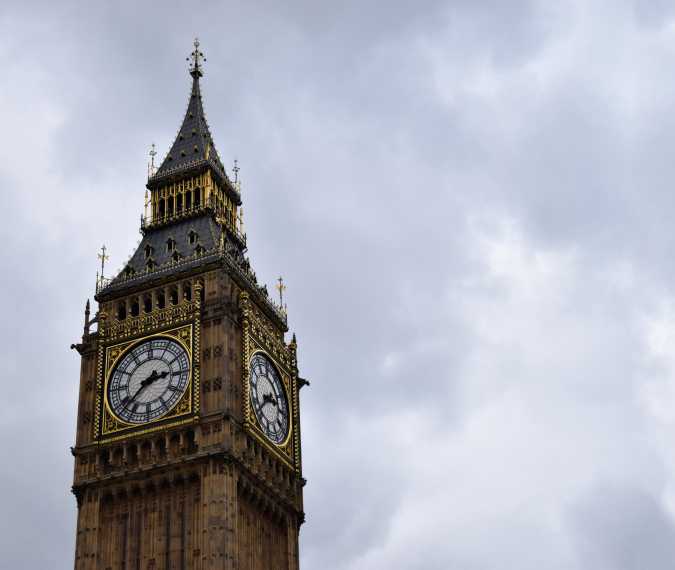
UK clocks will go back EARLIER next month as Daylight Saving Time ends – with date for 5pm sunsets revealed
Autumn will bring an important time change across the UK, as the country prepares to leave British Summer Time and return to Greenwich Mean Time.
The clocks will go back by one hour on Sunday, October 25, 2026, giving people an extra hour overnight but also bringing noticeably earlier sunsets as winter approaches.
For visitors planning an autumn trip to Britain, the change is worth keeping in mind, particularly when checking transport schedules, reservations and other time-sensitive plans.
What time do the clocks go back in the UK in 2026?
The change from British Summer Time (BST) to Greenwich Mean Time (GMT) will happen in the early hours of Sunday, October 25.
At 2 am BST, the clocks will move back one hour to 1 am GMT.
Most modern technology switches automatically. Smartphones, laptops, tablets and many other internet-connected devices should display the new time without users having to do anything.
However, traditional clocks and watches may still require manual adjustment. Travelers should also check clocks in rental cars, older alarm clocks, and appliances in holiday accommodation, as these may not update automatically.
The 2026 change arrives one calendar day earlier than it did in 2025, when the final Sunday of October fell on October 26.
In the following years, the clocks are scheduled to go back on October 31, 2027, and October 29, 2028.
When will the clocks go forward again?
Longer spring and summer evenings return in March 2027.
British Summer Time will start again on Sunday, March 28, 2027. At 1 am GMT, the clocks will advance to 2 am BST, meaning an hour is effectively lost overnight.
Under the current system, the UK changes its clocks twice each year. They move forward on the final Sunday of March and return to GMT on the final Sunday of October.
The familiar saying “spring forward, fall back” is an easy way to remember which direction the clocks move.
Why does Britain change its clocks?
Britain's seasonal clock changes have a history stretching back more than a century.
One of the best-known advocates of changing the clocks was British builder William Willett, who campaigned for the idea in the early 20th century. He believed adjusting the time during the warmer months would allow people to make better use of available daylight.
His proposals initially struggled to gain political approval, and efforts to introduce a daylight-saving system failed several times.
The situation changed during the First World War. The Summer Time Act 1916 received Royal Assent on May 17, 1916, introducing summer time in Britain.
Under the new system, the country's clocks were moved forward for the first time on May 21, 1916.
What the October clock change means for UK visitors
For most travelers, the practical effect is straightforward: anyone staying in the UK on the night of October 24–25 will wake up to the new GMT schedule on Sunday morning.
The change also signals the period of the year when daylight becomes increasingly limited, especially later in the afternoon. Visitors planning sightseeing, countryside walks, road trips or outdoor attractions should therefore pay closer attention to daylight hours when organizing their itineraries.
Transport and accommodation bookings should continue to show local time, while smartphones will normally adjust from BST to GMT automatically.
The key date to remember is Sunday, October 25, 2026: at 2 am BST, Britain turns its clocks back to 1 am GMT.